Steve Holtje has been an editor since 1987 (Creem, CDNOW.com) and a music critic since 1990. He is currently the label manager of ESP-Disk’, and the content editor of CultureCatch.com. Among his publishing credits is MusicHound Jazz: The Essential Album Guide (Schirmer Trade Books, 1998). He has additionally worked for jazz record labels and as a music printer. He is also a composer.
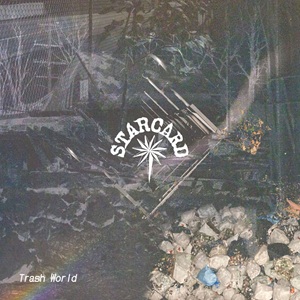
If I knew nothing about this band, I’d guess it was a ’90s indie group. At no point does it ever sound imitative, but at times I hear echoes of Liz Phair, Nirvana, Blake Babies, and (when her voice is quieter and the guitars shoegazey) Nightblooms—but always more raw, more nakedly expressive, more in-your-face in the best way: yes, noisy.
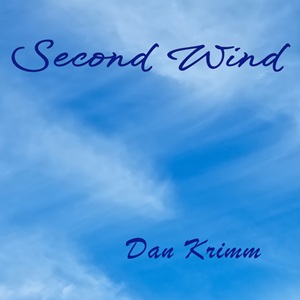
Krimm’s harmonies are often pleasingly off the beaten path. If this music has any antecedent, it’s the darkly glinting Eurojazz of ECM.
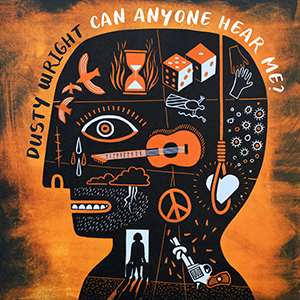
It’s not easy listening if you pay attention to the lyrics, but it rewards that attention with catharsis.
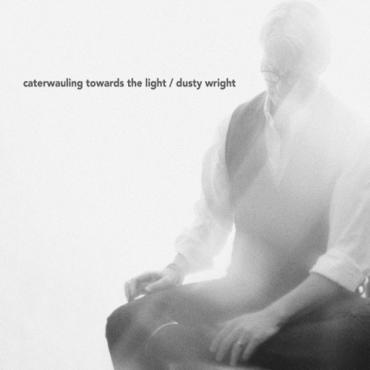
Wright…has been writing more deeply personal songs on recent albums, just from the greater perspective gained from dealing with all aspects of life over a long period of time. Recently, death in the family more keenly focused this tendency, and the hard-earned result is a touching album of plainspoken truths.
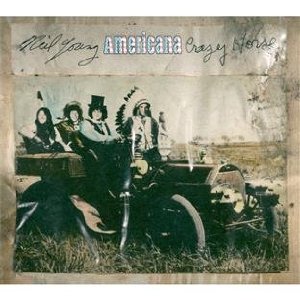
You’ve probably heard by now that for his umpteenth album, Neil Young chose to sing (mostly) American (mostly) folk songs. It seemed like a good idea, and I wanted to like this album. I’m a huge Neil Young fan — I’ve even been known to defend the merits of Landing on Water. So yes, I wanted to like it, but I just can’t.
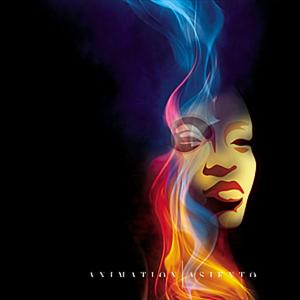
A concert remake of Miles Davis’s seminal fusion album Bitches Brew.

Occupying the middle ground between the more ethereal Brock Van Wey and the darker and dirtier Thomas Watkiss, this is an exceptional debut.
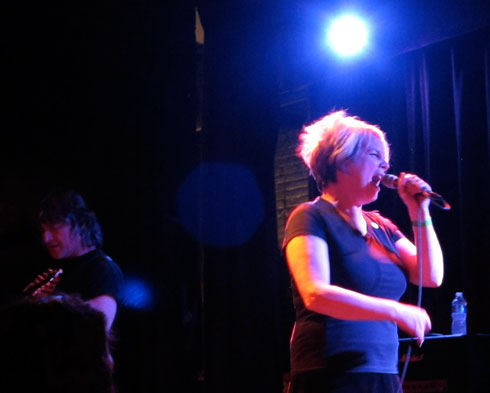
It was a great honor and a pleasure to be able to provide music before, between, and after the great bands that played the first night of the Big Takeover’s 30th Anniversary festival at Bell House. Here are my playlists, with the performing bands also listed to provide context.
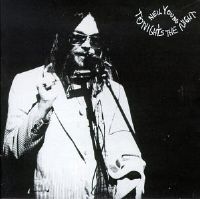
Tonight’s the Night is ragged, bleak, weird. It must have come as a complete shock to label executives hoping for more mellow classics along the lines of “Heart of Gold.” It sat unreleased for two years.
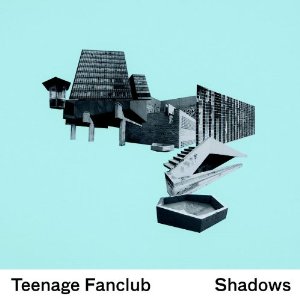
Yes, Teenage Fanclub is incredibly consistent, but there’s a huge amount of sonic variety on this album; it’s easy to imagine the guys spending five years saying “how about if we add banjo here?”

The original material is practically irrelevant; what matters is that Maherr has crafted seductively dark and textured swathes of sound.

Simone recasts ancient blues songs by Memphis Minnie and Kansas Joe McCoy to create the epic opening track “Levee/1927.”

Rock is often called the music of rebellion, but rarely is it so true as here. Koes Bersaudara ended up in jail for three months in 1965 for playing Beatles songs in their concert sets.
Morrissey cited them as a favorite, but really, who doesn’t like them? Their 1988 debut album Lovely, with its hit single “Crash,” still sounds great, as does the follow-up, Pure. Lovely showed more musical range than much of the competition.

This soundtrack for Marc Craste’s animated film Varmints is absolutely beautiful, of course, yet with an austere elegance and the occasional dissonant edge.

The fertility and innovation of the Athens, GA music scene in the late ’70s/early ’80s is legendary (B-52s, Pylon, Love Tractor, R.E.M.). Now, in the wake of DFA’s wonderful Pylon reissues, Acute, which has long had an interest in that period if not that locale, blesses us with more brilliant material from that time and place.
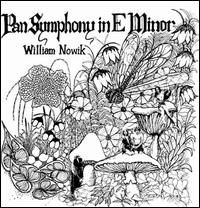
There’s a buzz about this 1974 album among collectors of vintage psychedelia and prog-rock; quite a rarity, the original LPs — only 200 pressed — were supposedly going for as much as $1000 in online auctions (the highest I saw was $800).

This album was inspired by Merritt’s image of ’60s folk music – big-production folk with dazzlingly complex arrangements.

A spectacularly intense yet intimate performance by a still-hungry young artist on the rise.

The music here is denser, heavily grounded in low drones; its thrums and buzzes are more genuinely industrial in tone than the Industrial genre ever was.

This album often suggests the feelings from a nerve stretched taut and sawed at. Don’t put this on for a comfortable listen; put it on for intense and disturbing catharsis.
Some of the songs here seem like folk disguised with electric guitar, beautiful and personal in their expression.

This is soul offering little uplift (some hypnotic grooves and the momentum built from insistent repetition) but plentiful painful catharsis.

Drums and Wires, released 30 years ago (August 17, 1979), initiated XTC Mark II.
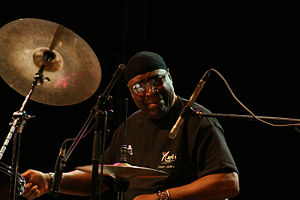
Jazz drum great Rashied Ali died on Wednesday after a heart attack.

The way the droning, slowly percolating textures are electronically treated is redolent of the fuzzy friendliness of laptop ambient, while the arc structures sound completely composed and their long, slow crescendos will sound familiar to post-rock fans, but with mirroring decrescendos instead of pounding climaxes.
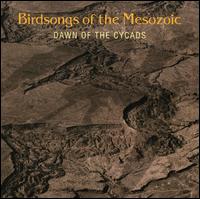
They were basically a modern classical chamber group playing written music, but they played at rock clubs, and despite the unusual instrumentation Birdsongs rocked hard – in a looping, minimalist way.

“Fans, for the past two weeks you have been reading about the bad break I got. Yet today I consider myself the luckiest man on the face of this earth.”

SY has a great sound, and even when the lyrics are silly or lackadaisical, Lee and Thurston’s distinctive guitar timbres push all the right buttons. They invented this sound/style, and despite all the bands influenced by it over the past three decades, they’re still the best.

Certainly the 40th anniversary of Astral Weeks deserved to be celebrated, but conceptually, it was a bit odd to present one of the most intimate albums in rock history at the Hollywood Bowl, capacity 17,376. But what could’ve been a disaster proved a triumph.


What’s great about the Nigeria 70 compilations is that they give us a fuller context in which to view the stars.

One of the great post-punk bands, 23 Skidoo probably owes its relative obscurity (compared to pals Cabaret Voltaire) to its frequent and radical style-shifts.

Here are six of my favorite Gayle albums. Most are imports, out of print, poorly distributed, or combinations of those states, but a look at Amazon shows that they can be found.

On their fourth album together, KOEN HOLTKAMP and BRENDON ANDEREGG construct sonic landscapes that mix their anti-virtuoso/timbre-focused playing of musical instruments, field recordings, and electronic treatments.

Tonight (Friday 1/30, 6:30) Shiraishi will be at Japan Society, reading with Itaru and participating in a discussion moderated by Forrest Gander. Saturday afternoon at 2 she will be at the Bowery Poetry Club, again with Itaru, who is quite a wonderful and imaginative player; also reading will be Beat legend Ira Cohen, health permitting, and Steve Dalachinsky, who will furthermore pitch in with Shiraishi on the English/Japanese tandem parts. I will be there.

Another year, another fine show from Neil Young’s archives. This one is compiled from two solo acoustic shows on consecutive nights in Ann Arbor, before his solo debut had been released.

Nobody else has reimagined the basics of rock so drastically or so well in a long time.

I don’t often wish I were in Los Angeles, but if I could be there November 7-8 at the Hollywood Bowl, I would, because forty years after its November 1968 release, Van Morrison will be performing his album Astral Weeks with two of the musicians he recorded it with.

October 1973 (35 years ago) marked ABC’s last-ditch attempt to garner a hit for this album: They released the single “My Old School,” backed by “Pearl of the Quarter.” It didn’t work.

Fasteau will be playing this Tuesday, October 14 at 10 PM at Bowery Poetry Club, 308 Bowery, NYC with Clif Jackson (bass), Ron McBee (percussion, berimbau), and guests. This is part of the monthly ESP-Disk series at BPC.

For male vocalists in pop music, it’s the tenors who get all the glory, but in jazz and much soul it’s the baritones, and when I saw this San Francisco-based veteran compared to JOE WILLIAMS and LOU RAWLS, I was eager to check him out.

All of this supporting/surrounding lyrics of desolate debauchery, anomie, and despair, as though trying to turn “Holocaust” into party music.

Using a combination of the original session tapes, demos, and newly recorded parts, near the end of last year the band put out a version conforming to their own sound rather than their producers’. Three decades on, the classic underneath the bad production has been revealed, proving that the excitement they generated in their home base of Los Angeles was not mere hype.
Levin, a grizzled veteran by now, has come to a distinctive style that, while certainly inspired by his predecessors’ work, is never obviously derivative of anyone in particular. Nor does it stand in one place; Levin is just as likely to play a melodic phrase as to unleash flying flurries of evolving patterns arpeggiated and/or scalar or soar into the altissimo register of his tenor in ecstatic exultation.

Part of a trilogy, this is darkwave ambient music, quiet but with serrated edges on its drones. There’s nothing new agey about this ambient, which makes for uneasy listening with its buzzing and clanking amid the drones and a glacial pace of movement that oozes foreboding.

Yeah, the chiming guitars and chord progression of “Graveyard Girl” keep threatening to turn into “Money Changes Everything,” but that fits well with the ‘80s love on display throughout – usually much more synthpop, of course.

LARRY KIRWAN, the leader of Black 47, is no Toby Keith – he’s his diametrical opposite on the political spectrum – so this is no rah-rah “support our troops” tripe.

Hebb’s soft voice is as warm and charming as it was on “Sunny” back in ‘66, and the tasteful arrangements are smoothly authentic.

After listening to their great Escape from Dragon House practically every day for most of last summer, I wasn’t sure whether a new album could captivate as strongly, but after two plays this had its hooks in me.
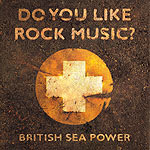
The fact that their evolution over three albums and various EPs has avoided repetition will be mourned by some who want only the familiar, but refreshingly enables them from becoming outdated.

The Truckers have long specialized in gritty portrayals of the New South’s sordid sides. A few titles such as “Daddy Needs a Drink,” “You and Your Crystal Meth,” and “A Ghost to Most” give an idea of the dirty soap operas that play out across this epic album, but the black humor – usually paired with a profound empathy – runs deep through most of the 19 songs.

It’s only January, but already we’ve got our first example of major label greed running out of control. Nonesuch, a division of WEA, has issued two versions of the soundtrack to Tim Burton’s film of Sweeney Todd, The Demon Barber of Fleet Street, starring Johnny Depp in an adaptation of Stephen Sondheim’s musical of the same name. Consumers – and retailers – have an unpleasant choice to make.
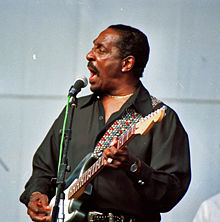
IKE TURNER died December 12, reportedly in his sleep. He was 76 years old. Was he a good man? Seems unlikely. Was he a good musician? Hell yeah. The man invented rock ‘n’ roll. Really.

The delicacy of her music in this period is of a piece with her famous 1970 LP, and her voice is even more angelic.
On the first Sunday of every month, Sound Fix Lounge behind the record store has a mix exchange. Here’s my mix for the December 2 exchange: “The Saddest Songs in the World.”
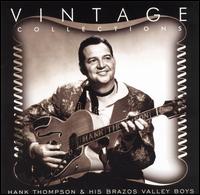
Hank Thompson died Tuesday (11/6/07) of lung cancer. His combination of Honky Tonk singing and sentiments with Western Swing backing made him a country music superstar.
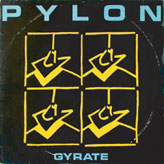
A legendary post-punk band from Athens, GA, PYLON is more than just historically important (an obvious and frequently acknowledged influence on R.E.M., among others). This is great music, highly original at the time.

The sound is a bit heavier, rhythms a bit stronger. That added heaviness is balanced, however, by the addition of female vocals.
Shouldn’t music critics know something about, you know, music?

La Otracina journeys back three decades to the days when interstellar explorers traveled on waves of guitar riffs, propelled through space and time by hard-hitting drum juggernauts.
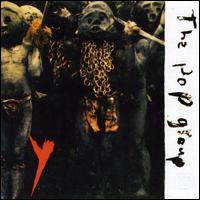
This hugely underrated 1979 post-punk debut LP from Bristol, England’s ironically named The Pop Group appears for the third time on CD, having finally acquired a bonus track.
One of the stranger albums to reemerge in the freak-folk revival of psychedelic artifacts.
How did Universal Music Group celebrate the 40th anniversary of the July 17, 1967 death of John Coltrane? By continuing to milk his catalog for all it’s worth.
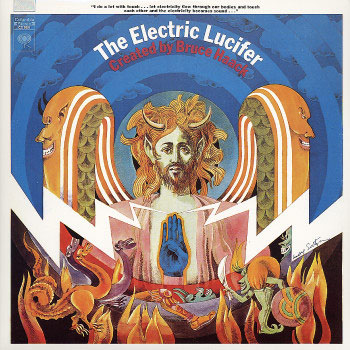
One of the great outsider creations finally makes it to CD!
Every year, this artist-curated avant-garde jazz festival offers the greatest concentration of outstanding performances in New York.

On the four lengthy tracks, the effect is both hypnotic and transcendent. For variety, halfway through there’s the brief “Clouds Collapse,” a sparely constructed array of plucks and plinks that achieves a Zen-like intense focus on pure sound, the perfect palate cleanser.

All the thrumming tunefulness and enigmatic lyricism returns (the lyrics filled with even more foreboding and dread now), with some new twists.
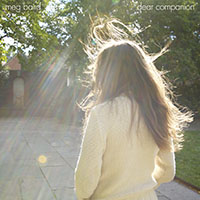
Meg Baird of Espers has made a solo acoustic album in the vein of the traditional English folk that has been such a major ingredient in the sound of her band.

Smog mastermind Bill Callahan puts his name on this album for a reason. You can tell who it is, no question about that, but it doesn’t sound like Smog.

The band that almost makes Boredoms sound mellow by comparison returns with another aural assault, their first album of new material in four years – now with added theremin!
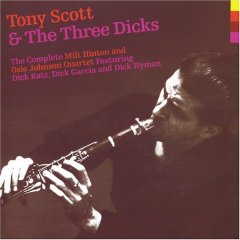
Jazz/world music clarinetist/saxophonist TONY SCOTT died on March 28, and as so often happens, that prompted me to see what of his I had to listen to. It turned out that I had very little of his early recorded output, so I bought two recent compilations of his ‘50s material to do some belated catching up.
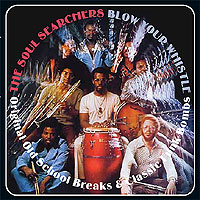
Not only is this some of the best funk of the period, and historically important as the root source of what in a few years would become the Washington D.C. Go-Go scene, it includes one of the most heavily sampled breakbeats around, from the instrumental “Ashley’s Roachclip.”
It took 36 years for this to be officially released; it’s worth the wait.
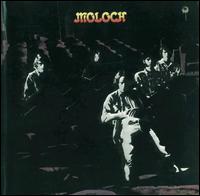
What Sharp did was take Monkish attributes and emphasize them even further.
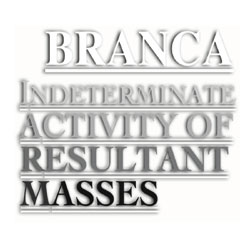
This is an odd but fascinating compilation of three very disparate items. The title piece, for ten electric guitars and drums, is previously unreleased; a 31-minute Glenn Branca work from 1981 finally appearing is enough reason in itself to acquire this disc.
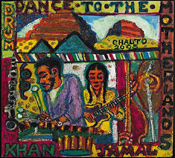
This is an engrossing set of spacey free improvisation, as much psychedelia as jazz, as African as it is Philadelphian.

If you’re holiday shopping for a box set to give to a jazz fan, consider this exemplary new compilation. Weather Report was one of the most influential electric jazz bands, setting fusion trends and then moving beyond them to set new ones.
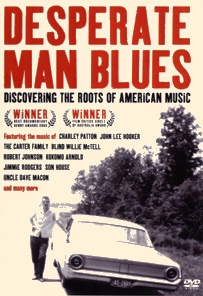
“You can thank old time record collectors for the music that is left because the record companies didn’t give a damn about any of that stuff. They threw all the stampers out.”
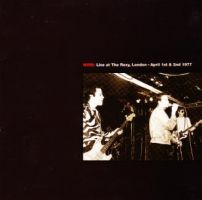
The London shows (the same 17 songs on successive nights) find them in their most helter-skelter, confrontational punk vein as they play their first and second gigs as a quartet. In NYC the following year, most of the set comes from Chairs Missing.
Slits shambolic, Green Milk schizo, Genghis Tron clever, Apes still rock
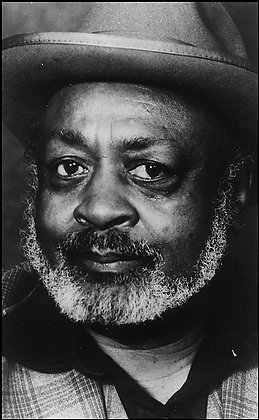
Guitarist Robert Lockwood Jr. was one of the greats of blues, though the general public never seemed to realize it.
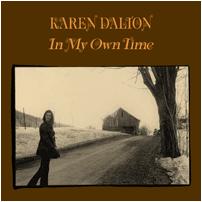
The cracked majesty of her singing, sounding so raw and vulnerable yet actually imbued with subtle craft, recalls BILLIE HOLIDAY in her final years. An acquired taste for some, but for many there’s an immediate attraction.
A segment of this Los Angeles ensemble journeyed cross-country to team with some of the elite members of NYC’s downtown improvisational scene.

When the album was originally released, Smith was only allowed to sing on two tracks. Now we get to hear his vocal demos of all 10 original tracks and an additional four songs, plus two instrumentals.

25 years after the Slits’ previous recording, original members ARI UP and TESSA POLLIT re-team for a three-song EP.
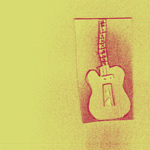
Low guitarist delivers a collection of dark, frightening landscapes turned to sound, pushing listeners to really focus on the emotional, physical quality of timbre and the way it can create a sense of space – or, on occasion, a claustrophobic lack of space.
Buckner’s words are evocative yet enigmatic; he describes situations so specifically, at such a fine level of detail, that paradoxically their definable meaning cannot be pinned down—and yet, the mood is communicated perfectly through his world-weary singing.
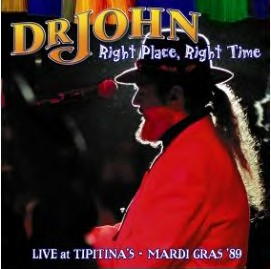
This souvenir from 17 years ago catches Dr. John in action at a beloved New Orleans nightclub. The ten-song program’s a nice mix of Rebennack-penned classics, New Orleans standards, and blues/R&B warhorses infused with Nawlins goodness.

This year, Heartbeat Records is marking “50 years of Jamaican music” by spiffing up its catalog of Clement S. Dodd’s many Studio One recordings with remastering, bonus tracks, and new compilations.
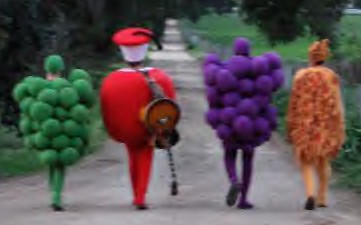
The Fruit of the Loom parody “Blue” is so dead-on that it reveals the utterly formulaic nature of the style, capturing especially well the necessity for a high, plaintive, angst-ridden, frankly wimpy vocal.

On Thursday, famed comedian and actor RED BUTTONS died in Los Angeles after a lengthy struggle with vascular disease. He was 87.

This is SONIC YOUTH’s third consecutive excellent album. They haven’t had a run that good since Evol/Sister/Daydream Nation.

The shoegaze revival continues with this Brooklyn band’s sophomore release. If I’d been told that Asobi Seksu translated as “we love instrumental codas,” I’d’ve believed it.

There’s an exceptional amount of style-hopping, from track to track and within pieces as well, and Charlie Hunter shifts his sound so often he sounds like three or four different guitarists.
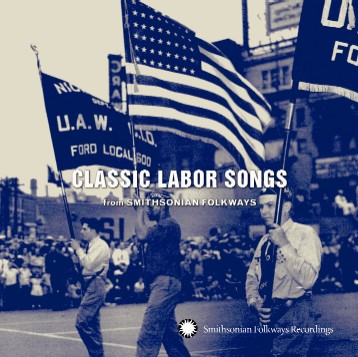
This 78-minute, 27-track compilation opens aptly with the classic “Joe Hill,” proclaiming that the Industrial Workers of the World leader’s spirit lives on, despite his execution.

Mostly this sticks to the older, and musicologically primary, definition of ballad: a narrative song. These include some of the most famous American folk songs, and American characters: “Casey Jones,” “Staggerlee,” “Frankie and Johnny.”
It’s always a welcome event when JAMES “BLOOD” ULMER’s genre-twisting harmolodic trio reunites for a rare recording session.

This can’t really be called a “Best Of” without including any of LOU RAWLS’s hits, nor can all of the tracks here be termed either jazz or blues. None of this matters, though, because there are three things that matter more…
One of the greatest songwriters in country music delivers his first album of new songs in eleven years with simple and direct arrangements that intimately and honestly frame his masterful lyrics.

I’m particularly happy to have this on CD because it’s the only album I’ve ever truly worn out on vinyl, a quarter-century ago when I was in college. Back then, I’d never heard a solo piano record like this May 11, 1972 session, and it’s still unique to me.
Going as strong as ever, 18 years after their first recording was released, Seattle’s long-lasting grunge heroes have tweaked their formula with excellent results.

Everything on Pohlitz was played and processed in real time, with no overdubs or pre-programming. While it is definitely a drummer’s album, it is a truly musical experience in which drumming is the means, not the end.
This wonderfully textured music takes me back to the early 1990s, when bands such as SWERVEDRIVER, SLOWDIVE, and KITCHENS OF DISTINCTION erected brooding, monumental mid-tempo song-sculptures.
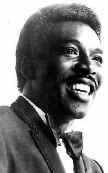
Wilson Pickett died of a heart attack on January 19 at the age of 64. He was so loved, idolized, and influential, and his music so woven into the fabric of American culture, that he is one of the immortals of music.
In Greenpoint, at the Kingsland Tavern, a multi-genre bill of avant-garde jazz, American Primitive acoustic guitar, and freak-folk blew minds.

LOU RAWLS was a welcomely ubiquitous presence for four decades, and, with consummate taste, he wielded one of the greatest singing voices in pop music history.

As a reader pointed out in a comment on the first part of my look back at 2005, it’s been a good year for historical material.

THE “5” ROYALES were no ordinary R&B group. So when their great lead vocalist JOHNNY TANNER died of cancer on November 8, why was there no American media coverage?
It’s safe to compile best-of-the-year lists, since nothing in December will bump any picks down. The more conscientious list-makers relisten to favorites from earlier in the year to see if they’ve held up. Here are a few I’ve enjoyed reacquainting myself with.
This three-CD set of three concerts offers a thrilling look back at different eras of this long-running group (16 years), and some amazingly compelling music.
As one of the three greatest living jazz violinists, leader BILLY BANG is a major attraction on this valuable reissue, his bluesy tone and harmonic sense always making him immediately identifiable and irresistible.
I’ll be writing about music from the context of working at Sound Fix, an independent record store in Williamsburg (Brooklyn, NY).